
I Used to Think a Sustainable Kitchen Had to Be Expensive
Whenever I saw photos of “eco-friendly kitchens,” they all looked beautiful—but also completely out of reach.
There were custom bamboo cabinets, designer composting systems, imported stone countertops, and high-end appliances that cost more than my entire kitchen renovation budget.
It made sustainability feel like a luxury.
So I ignored it.
Instead, I focused on making meals, keeping the kitchen clean, and trying not to waste too much food.
Then something unexpected happened.
Without trying to create a “green kitchen,” I slowly started making small changes that happened to be better for both the environment and my wallet.
I bought reusable glass containers because they lasted longer than plastic ones.
I switched to LED lighting because my electricity bill kept increasing.
I started planning meals because I was tired of throwing away vegetables that spoiled in the refrigerator.
None of these decisions felt revolutionary.
But together, they completely changed how my kitchen worked.
That’s when I realized sustainability isn’t about creating a picture-perfect eco showroom.
It’s about designing a kitchen that supports everyday life while reducing unnecessary waste.
And for people who actually cook every day, those small choices matter far more than expensive trends.
Start With What You Already Have
One of the biggest misconceptions about sustainable design is that everything needs to be replaced.
In reality, the most environmentally friendly kitchen is often the one that already exists.
Before buying new cabinets or countertops, ask yourself a simple question:
Can what I already have be improved?
Painting cabinet doors instead of replacing them.
Updating hardware.
Installing better lighting.
Refinishing wooden surfaces.
Replacing only damaged sections instead of tearing everything out.
These upgrades extend the life of existing materials while dramatically reducing renovation waste.
Sometimes the greenest decision isn’t buying something new.
It’s appreciating what already works.
Choose Materials That Age Beautifully
I’ve become much more selective about materials over the years.
Instead of asking which surface is trending, I ask which one will still look good after ten years of daily cooking.
Natural wood is a perfect example.
Small scratches become part of its character rather than flaws.
Quality stone develops personality over time.
Durable porcelain surfaces resist stains and wear without requiring frequent replacement.
Sustainable kitchens aren’t filled with delicate finishes that need constant care.
They’re built from materials that improve with age.
When something lasts longer, it naturally creates less waste.
Energy Efficiency Doesn’t Mean Sacrificing Comfort
One of the first upgrades I noticed on my electricity bill was switching to LED lighting.
The kitchen became brighter.
The bulbs lasted much longer.
And I wasn’t replacing them every few months.
Later, I upgraded an aging refrigerator that had become surprisingly inefficient.
The new appliance used noticeably less electricity while keeping food fresher for longer.
Sustainability often works this way.
The better choice is also the more practical one.
Modern induction cooktops, efficient dishwashers, and ENERGY STAR® appliances aren’t just environmentally conscious.
They also make everyday cooking more enjoyable.
Think About Food Waste Before Kitchen Décor
When people discuss sustainable kitchens, they often focus on materials.
But one of the biggest environmental impacts happens inside the refrigerator.
I used to lose vegetables in the back of the crisper drawer until they were no longer usable.
Fresh herbs wilted before I remembered they were there.
Leftovers disappeared behind taller containers.
Eventually, I reorganized the refrigerator so everything was visible.
Clear containers.
Simple labels.
Frequently used ingredients at eye level.
Suddenly, I started wasting far less food.
That small organizational change probably had a bigger environmental impact than buying another eco-friendly product.
Reusable Doesn’t Have to Mean Complicated
I didn’t replace every disposable item overnight.
That would have been expensive—and unrealistic.
Instead, I made gradual swaps.
Glass food containers replaced worn plastic ones.
Cloth kitchen towels replaced rolls of paper towels for everyday cleaning.
Reusable shopping bags stayed by the front door instead of inside a forgotten drawer.
A refillable soap dispenser eliminated countless plastic bottles over time.
None of these changes felt difficult.
They simply became habits.
And because they fit naturally into my daily routine, they actually lasted.
Water-Saving Habits Start With Better Design
One thing I never appreciated before was how much kitchen design influences water use.
A deep sink made washing large pots easier without running extra water.
A modern faucet with an efficient aerator reduced flow while still feeling powerful.
Even keeping frequently used dishes organized near the dishwasher reduced unnecessary rinsing and repeated washing.
Good design quietly encourages better habits.
Sometimes sustainability isn’t about working harder.
It’s about making the better choice the easier choice.
Choose Countertops and Flooring That Last, Not Just What’s Trending
One thing I’ve learned from watching friends renovate their kitchens is that replacing something twice is rarely the sustainable option.
A countertop that chips easily or flooring that starts showing wear after a few years eventually ends up in a landfill. That’s why durability has become one of my biggest priorities.
Quartz continues to be a popular choice because it resists stains, requires very little maintenance, and holds up well to everyday cooking. If you love natural materials, responsibly sourced stone or solid wood can also last for decades when properly cared for.
For flooring, materials like luxury vinyl plank, porcelain tile, and engineered hardwood often provide the best balance of longevity, comfort, and easy maintenance.
The most sustainable product isn’t always the one with the greenest label.
It’s often the one you won’t need to replace anytime soon.
Buy Better, Buy Less
Living with a smaller kitchen taught me an important lesson.
Owning fewer, higher-quality tools is often better than filling every drawer with inexpensive gadgets.
I used to collect single-purpose kitchen tools because they seemed useful at the time.
An avocado slicer.
A banana holder.
A specialized egg cutter.
Most of them ended up sitting untouched for months.
Eventually, I replaced them with versatile tools that handled multiple tasks.
A sharp chef’s knife replaced several specialty cutters.
A cast-iron skillet handled everything from breakfast to roasting vegetables.
A sturdy wooden cutting board became one of the hardest-working items in the kitchen.
Buying less didn’t mean giving up convenience.
It meant choosing products that genuinely earned their place.
Storage Should Help Reduce Waste
Good storage isn’t only about keeping the kitchen tidy.
It also helps prevent unnecessary purchases.
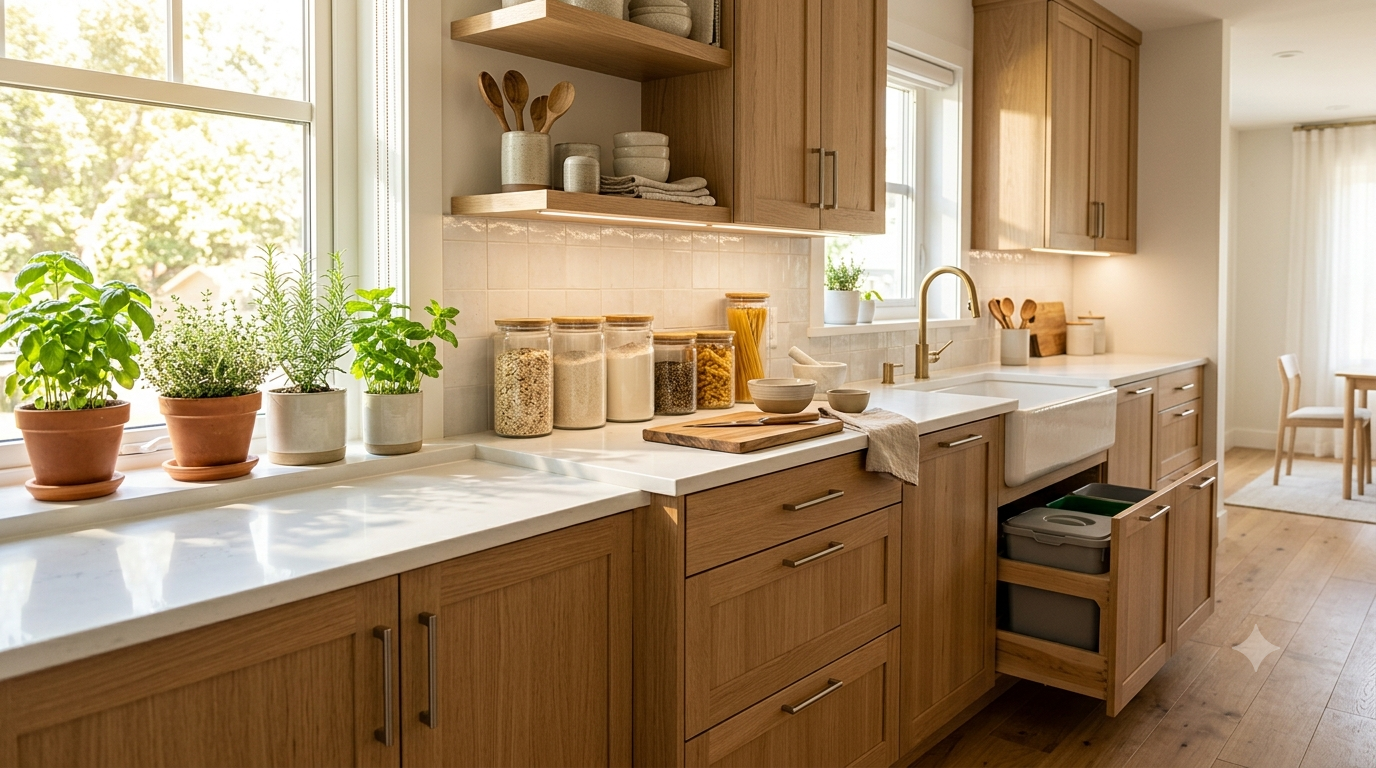
Once I switched to clear containers for rice, flour, pasta, and cereals, I stopped buying duplicates because I could finally see exactly what I had.
Simple labels made meal preparation easier.
Stackable containers made better use of cabinet space.
A lazy Susan in the corner cabinet stopped jars from disappearing into the back.
The kitchen became more organized, but something else happened too.
Food stayed fresher because it was easier to find and use.
Sometimes sustainability begins with simply knowing what’s already in your pantry.
Composting Can Be Surprisingly Simple
I’ll admit I used to think composting sounded messy.
I imagined unpleasant smells, complicated systems, and extra work.
In reality, a small countertop compost bin with a charcoal filter changed my opinion completely.
Fruit peels, coffee grounds, eggshells, and vegetable scraps no longer went straight into the trash.
If you have a garden, compost becomes a valuable resource.
Even if you don’t, many cities now offer community composting programs or collection services.
You don’t need an elaborate setup.
Just creating a separate place for food scraps is often enough to reduce household waste significantly.
Bring Nature Into the Kitchen
One of my favorite sustainable additions didn’t come from a renovation store.
It came from the garden center.
A few small pots of basil, mint, parsley, and rosemary now sit beside the kitchen window.
Not only do they add fresh greenery to the room, but they also reduce the need to buy packaged herbs that often spoil before being used.
There’s something satisfying about snipping a handful of fresh basil while cooking dinner.
It connects the kitchen to the ingredients in a way that feels simple, practical, and rewarding.
Even if your kitchen only has one sunny window, a few herbs can make a noticeable difference.
Repair Before You Replace
Modern life often encourages replacing things the moment they show signs of wear.
But some of my favorite kitchen items have lasted for years because I chose to repair them instead.
A loose cabinet hinge was tightened rather than replacing the door.
A wooden cutting board was sanded and re-oiled.
Dining chairs received new cushions instead of being thrown away.
These weren’t major projects.
They simply reminded me that extending the life of everyday items is one of the easiest ways to reduce waste.
A well-maintained kitchen usually becomes a more sustainable one almost by accident.
Sustainability Doesn’t Have to Look Perfect
Scrolling through social media can sometimes make sustainable living feel intimidating.
Perfect pantries.
Matching glass jars.
Designer compost bins.
Custom-built recycling stations.
The truth is, real kitchens are rarely that polished.
Some weeks you’ll remember your reusable shopping bags.
Other weeks you’ll forget them in the car.
You’ll occasionally waste food.
You’ll probably still use disposable products now and then.
And that’s okay.
Sustainability isn’t about perfection.
It’s about making better choices more often than not.
Those small improvements add up over time.
My Kitchen Feels Better Than It Ever Did
When I first started making these changes, my goal wasn’t to become more environmentally conscious.
I simply wanted a kitchen that was easier to use.
What surprised me was how closely those two goals were connected.
Buying fewer, better-quality tools reduced clutter.
Planning meals reduced food waste.
Energy-efficient lighting made the room brighter while lowering electricity use.
Reusable containers kept ingredients fresh for longer.
Nothing felt like a sacrifice.
Instead, the kitchen became calmer, more organized, and more enjoyable to cook in.
Looking back, sustainability wasn’t something I added to the kitchen.
It became the natural result of making thoughtful decisions.
Final Thoughts
Creating a sustainable kitchen doesn’t require a complete renovation or an unlimited budget.
It begins with paying attention to the little things.
Using what you already have.
Choosing durable materials.
Reducing food waste.
Buying with intention instead of impulse.
Those choices don’t just benefit the environment.
They make your kitchen work better every single day.
And for people who truly love cooking, that’s perhaps the most rewarding outcome of all.
Key Takeaways
- The most sustainable kitchen often starts with improving what you already own.
- Durable materials reduce waste by lasting longer.
- Energy-efficient lighting and appliances save both electricity and money.
- Clear pantry storage helps reduce food waste.
- Multi-purpose kitchen tools replace unnecessary gadgets.
- Composting can be simple, clean, and practical.
- Sustainability is built through consistent habits rather than expensive renovations.
Frequently Asked Questions
What makes a kitchen sustainable?
A sustainable kitchen focuses on durable materials, energy efficiency, reducing food waste, reusable products, and thoughtful purchasing decisions that minimize environmental impact.
Do I need to renovate my kitchen to make it more eco-friendly?
No. Small changes such as switching to LED lighting, organizing food storage, repairing existing cabinets, and reducing disposable products can have a significant impact.
What are the best eco-friendly kitchen materials?
Natural wood from responsibly managed sources, porcelain tile, quartz, recycled materials, and durable engineered wood products are all popular choices for long-lasting kitchens.
How can I reduce food waste in my kitchen?
Store ingredients in clear containers, plan meals, rotate older food to the front of the refrigerator, and keep frequently used ingredients visible.
Is creating a sustainable kitchen expensive?
Not necessarily. Many sustainable habits—such as repairing items, reducing waste, and buying fewer high-quality products—can actually save money over time.
Editorial Disclaimer
This article is intended for informational and educational purposes only. Sustainability practices, renovation decisions, and product performance vary depending on individual circumstances and local availability. Recommendations are based on practical experience and current home design trends rather than paid endorsements. PrimeBuzzHub may display advertisements from Google AdSense and other trusted advertising partners. Advertising does not influence our editorial content or recommendations.