
I Fell in Love With the Photos Before I Thought About Real Life
I’ll admit it—I was influenced by Instagram.
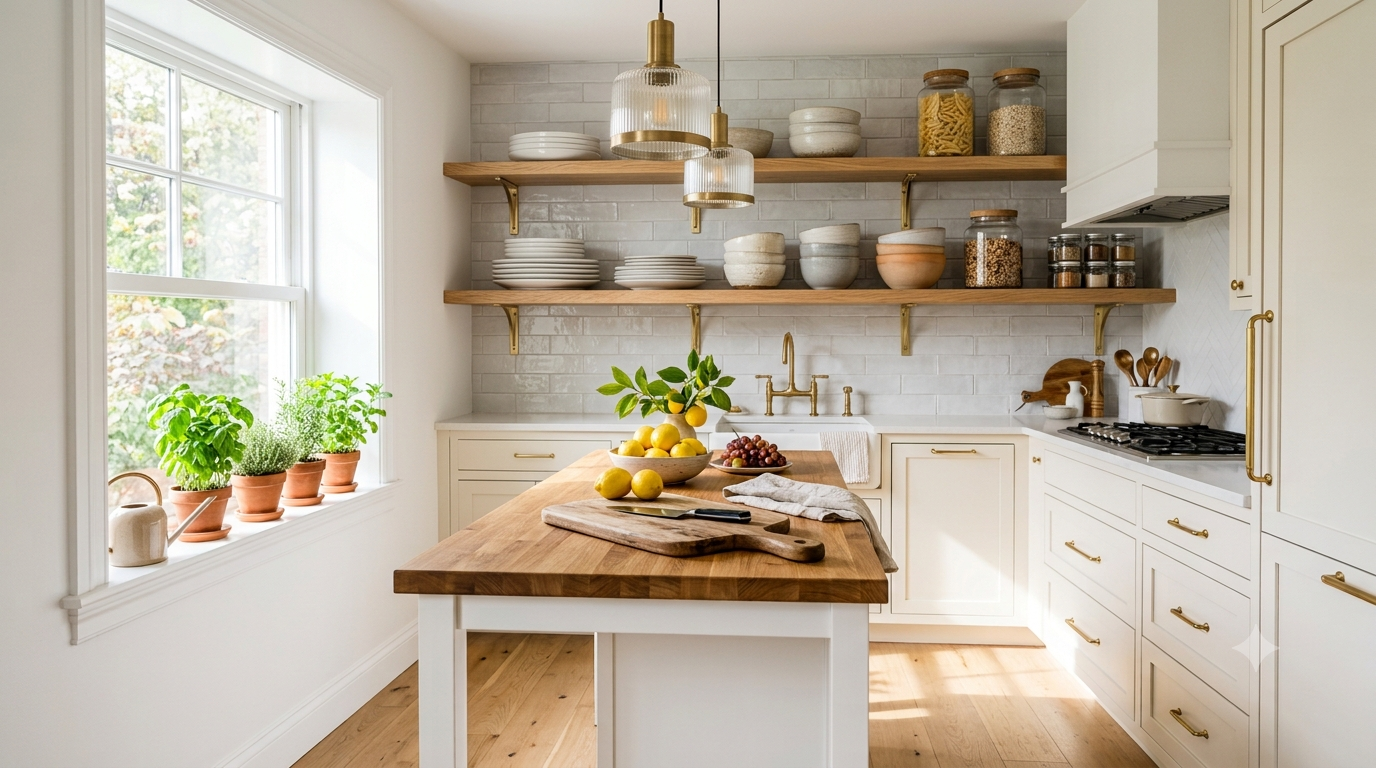
Every kitchen I saved had floating wooden shelves, handmade ceramic dishes, neatly stacked bowls, and sunlight pouring through oversized windows. The rooms looked calm, expensive, and somehow effortless. Compared to my own kitchen, packed with bulky upper cabinets and mismatched mugs hidden behind squeaky doors, those open shelves felt like the fresh start I needed.
So I started planning.
I watched renovation videos late into the night, read dozens of design blogs, and even measured my walls more times than I care to admit. The idea seemed simple enough: remove the upper cabinets, install beautiful wooden shelves, style them with everyday dishes, and suddenly my small kitchen would feel twice as large.
It sounded perfect.
What I didn’t realize was that beautiful kitchens in photographs don’t always tell the whole story.
After living with open shelving for months, I discovered there were plenty of things no one had mentioned. Some were wonderful surprises. Others made me question whether removing those cabinets had been the right decision.
If you’re thinking about making the same change, here’s everything I wish someone had told me before I picked up the drill.
Why Open Shelving Became So Popular
Kitchen design has changed dramatically over the last decade.
For years, homeowners focused on maximizing storage by covering every available wall with cabinets. Kitchens were practical, but they often felt closed in, especially in apartments and smaller homes.
Then something shifted.
Interior designers began treating kitchens less like workspaces and more like living spaces. Instead of hiding everything behind cabinet doors, they started displaying everyday essentials as part of the design.
Open shelves became the perfect middle ground.
Rather than feeling boxed in by rows of upper cabinets, the eye could travel across the room uninterrupted. Natural light reached more corners, walls appeared taller, and even compact kitchens suddenly felt brighter.
In 2026, this trend has evolved beyond minimalist white kitchens. Designers are embracing warm wood shelves, textured stone backsplashes, brushed brass brackets, handcrafted pottery, and soft neutral colors that make kitchens feel welcoming rather than staged.
The result isn’t just modern.
It’s personal.
The First Thing I Noticed Was How Much Bigger the Kitchen Felt
The transformation happened almost immediately.
Once the bulky cabinets were gone, the room felt lighter—not because I had gained more square footage, but because I’d removed visual weight from the walls.
Morning sunlight reached parts of the kitchen that had always been in shadow. The backsplash became a feature instead of something hidden behind cabinets. Even standing at the sink somehow felt different because the space around me seemed more open.
Friends who visited assumed I’d expanded the kitchen.
I hadn’t moved a single wall.
That’s one of the biggest advantages of open shelving. It changes how a room feels without requiring a major renovation.
If your kitchen is small, dark, or narrow, replacing even one section of upper cabinets with carefully planned shelving can create a surprising sense of openness.
Then Reality Started Showing Up
About two weeks later, I noticed something that had never crossed my mind during the planning stage.
Dust.
Not huge amounts.
Just enough to remind me that shelves don’t have doors.
Every plate, bowl, and glass sitting on those beautiful shelves was exposed to the air. If I used something every day, it wasn’t an issue. But serving platters, cake stands, and special mugs that only came out occasionally needed a quick rinse before use.
Cooking added another challenge.
Steam from boiling pasta.
Tiny droplets of cooking oil.
The occasional splash from frying vegetables.
Over time, these settled on the shelves much faster than I expected.
Cleaning wasn’t difficult, but it became part of my regular routine in a way closed cabinets never required.
It’s a small trade-off, yet one that almost every renovation video conveniently skips.
You Start Owning Less—And That’s Not a Bad Thing
One unexpected benefit completely changed the way I thought about my kitchen.
Open shelving forced me to edit.
When everything is visible, clutter becomes impossible to ignore.
I quickly realized I didn’t need twelve coffee mugs for two people.
Half my serving bowls hadn’t been used in years.
Plastic containers without matching lids suddenly felt impossible to justify.
Instead of finding more storage, I started needing less.
Every item on the shelves earned its place.
Slowly, the kitchen became calmer.
There were fewer decisions to make while cooking because I wasn’t digging through overcrowded cabinets looking for the right bowl.
Everything had a home.
Ironically, removing storage made the kitchen feel more organized.
Styling Is Harder Than It Looks
One of my biggest misconceptions was believing I could simply place dishes on the shelves and achieve that effortless magazine look.
That’s not how it works.
The kitchens you admire online are carefully styled.
Bowls are stacked by size.
Glassware is evenly spaced.
Colors complement one another.
Empty space is left intentionally so the shelves don’t feel overcrowded.
The first time I arranged mine, they looked… busy.
There were cereal boxes, travel mugs, random spice jars, children’s water bottles, and a collection of souvenir cups from holidays over the years.
It felt more like a storage room than a designer kitchen.
Eventually, I learned to treat the shelves as both storage and decoration.
I grouped similar items together, kept everyday dishes within easy reach, and stored less attractive essentials inside the remaining lower cabinets.
The difference was remarkable.
The shelves finally looked relaxed rather than chaotic.
Everyday Items Become Part of the Design
This was probably my favorite discovery.
Instead of hiding beautiful dishes inside cabinets, they became part of the room’s personality.
Simple white plates looked elegant stacked in neat piles.
Handmade ceramic bowls added texture.
A wooden cutting board leaning against the backsplash brought warmth.
Fresh herbs in small terracotta pots made the kitchen feel alive.
Even a glass jar filled with pasta or coffee beans added character without trying too hard.
The kitchen no longer relied on decorations purchased from a home store.
The things I actually used every day became the decoration.
That subtle shift made the space feel much more authentic than any perfectly staged showroom.
The Biggest Mistake People Make Is Going All In
If I could go back and change one decision, it wouldn’t be choosing open shelves.
It would be removing too many upper cabinets.
When you’re planning a renovation, it’s easy to think, “If one wall of open shelving looks good, the entire kitchen will look even better.”
In reality, balance is everything.
The kitchens that continue to look beautiful years later usually mix open shelving with traditional cabinets. Closed cabinets hide the less attractive essentials—plastic food containers, blenders, cleaning products, lunch boxes, and pantry items—while open shelves display the things you genuinely enjoy seeing every day.
This combination gives you the best of both worlds.
You keep the airy, open feeling without sacrificing practical storage.
Many designers in 2026 recommend replacing only 20–40% of upper cabinetry with shelving rather than removing everything. It’s a simple guideline, but it creates a kitchen that’s much easier to live with.
Open Shelving Isn’t Right for Every Home
This is something design inspiration rarely mentions.
Open shelving works beautifully for some lifestyles and can become frustrating for others.
If you cook once or twice a week and enjoy keeping your kitchen tidy, you’ll probably love it.
If you have young children constantly grabbing dishes, live in a particularly dusty environment, or cook heavily with oil and spices every day, maintaining open shelves may require more effort than you expect.
Large families often appreciate extra enclosed storage because kitchens naturally accumulate more cookware, lunch boxes, reusable bottles, and small appliances.
There’s nothing wrong with choosing traditional cabinets if they better support the way you actually live.
Good design isn’t about following trends.
It’s about creating a home that feels easier to use every single day.
The Best Materials for Open Shelves in 2026
One trend I genuinely love is the return of natural materials.
A few years ago, ultra-modern floating shelves dominated almost every renovation. They looked sleek but sometimes felt cold.
Today, kitchens are becoming warmer and more inviting.
Solid oak remains one of the most popular choices because it develops character over time and complements almost every cabinet color.
Walnut creates a richer, more dramatic look, especially when paired with soft cream or warm white cabinetry.
If your kitchen leans toward a modern farmhouse or Scandinavian style, ash wood and light maple offer a softer, brighter appearance.
Metal brackets have also made a comeback.
Rather than hiding every support, designers are embracing slim black steel or brushed brass brackets that add subtle architectural detail.
The overall goal isn’t perfection.
It’s authenticity.
Styling Without Creating Clutter
One lesson I learned surprisingly quickly is that empty space is just as important as the objects themselves.
When every inch of shelving is filled, nothing stands out.
Instead, I began following a simple routine.
I grouped plates together instead of scattering them.
Glasses stayed in one section.
Bowls were stacked by size.
Everyday mugs sat near the coffee machine.
A small plant added color without overwhelming the shelf.
I also discovered the value of repeating materials.
If you have wooden cutting boards, woven baskets, ceramic bowls, and linen towels, they naturally create a cohesive look because they share warm, organic textures.
The shelves begin to feel intentional rather than randomly decorated.
Lighting Makes More Difference Than You’d Expect
One unexpected improvement came after installing a pair of warm LED strip lights beneath the shelves.
During the evening, they cast a soft glow across the backsplash and countertops, making the kitchen feel noticeably cozier.
Lighting isn’t only practical.
It also highlights the objects you’ve chosen to display.
Simple white dishes suddenly appear more elegant.
Wood grain becomes richer.
Glass jars catch the light beautifully.
If you’re renovating in 2026, consider lighting as part of the shelving design rather than something to add later.
Even affordable under-shelf lighting can transform the atmosphere.
Keep the Most-Used Items Within Easy Reach
This sounds obvious, but it’s a mistake many people make.
It’s tempting to arrange shelves purely for appearance.
After a few weeks, I realized I was constantly reaching above my head for plates while decorative items occupied the easiest-to-reach shelf.
Eventually I reorganized everything based on daily habits.
Dinner plates stayed at arm’s height.
Coffee mugs moved beside the espresso machine.
Mixing bowls lived near the preparation area.
Serving platters occupied the highest shelf because I used them only occasionally.
The kitchen immediately became more efficient.
Beautiful design should always support daily routines—not interrupt them.
Cleaning Doesn’t Have to Be Difficult
The good news is that cleaning open shelves is much easier than I originally expected.
Instead of waiting months, I developed a quick habit.
Every weekend, while wiping the countertops, I’d also dust the shelves with a microfiber cloth.
Every few weeks I’d remove the dishes, wipe the shelf surface, and return everything to its place.
Because I was cleaning regularly, nothing ever became heavily coated with grease or dust.
The process took less than ten minutes.
Consistency mattered far more than deep cleaning.
Should You Follow the Trend?
After living with open shelving, my answer is surprisingly simple.
Don’t install it because it’s fashionable.
Install it because it matches the way you live.
If seeing beautiful everyday dishes makes you happy…
If you enjoy organized spaces…
If you don’t mind occasional dusting…
You’ll probably love open shelving.
If hidden storage gives you peace of mind, there’s absolutely nothing outdated about keeping upper cabinets.
In fact, one of the strongest kitchen design trends of 2026 is personalization.
Homes are moving away from copy-and-paste interiors and toward spaces that reflect the people living in them.
That’s exactly how kitchens should feel.
My Final Thoughts
Looking back, I don’t regret replacing part of my upper cabinetry with open shelves.
What surprised me wasn’t how the kitchen looked.
It was how differently I started using it.
I became more intentional about what I owned.
I appreciated everyday objects I’d never noticed before.
The room felt brighter, calmer, and somehow more welcoming—not because it became perfect, but because it became more personal.
Open shelving isn’t a magic solution.
It won’t automatically make a small kitchen feel luxurious.
But when it’s thoughtfully planned, balanced with practical storage, and styled around the things you genuinely use, it can completely change the atmosphere of your home.
Sometimes the best kitchen upgrades aren’t about adding more.
They’re about removing just enough to let the space breathe.
Key Takeaways
- Open shelving can make small kitchens feel brighter and more spacious.
- Replacing only some upper cabinets usually works better than removing all of them.
- Natural wood shelves remain one of the strongest kitchen trends in 2026.
- Keep everyday dishes on display and hide clutter inside closed cabinets.
- Regular light cleaning prevents dust from becoming a problem.
- Style shelves with intention by leaving some empty space.
- Prioritize function over trends when planning your kitchen.
Frequently Asked Questions
Is open shelving still in style in 2026?
Yes. The trend has evolved toward warmer, more practical designs using natural wood, mixed materials, and thoughtful styling rather than purely minimalist displays.
Does open shelving make a kitchen look bigger?
Often, yes. Removing some upper cabinets creates more visual openness and allows natural light to travel further across the room.
How do you keep open shelves from looking cluttered?
Display only frequently used or attractive items, group similar objects together, and leave intentional empty space between them.
Do dishes on open shelves get dusty?
Items used daily rarely collect much dust, but dishes used less often may need a quick rinse before use. Regular light cleaning keeps shelves looking fresh.
Should I remove all my upper cabinets?
Usually not. A balanced combination of open shelving and closed storage offers the best mix of beauty, organization, and practicality.
Editorial Disclaimer
This article is intended for informational and inspirational purposes only. Kitchen layouts, renovation requirements, and storage needs vary from home to home. Before removing cabinetry or making structural changes, consult a qualified professional if needed. Product and design recommendations are based on current trends and practical experience, not paid endorsements. PrimeBuzzHub may display advertisements from Google AdSense and other trusted advertising partners. Advertising does not influence our editorial opinions or recommendations.