
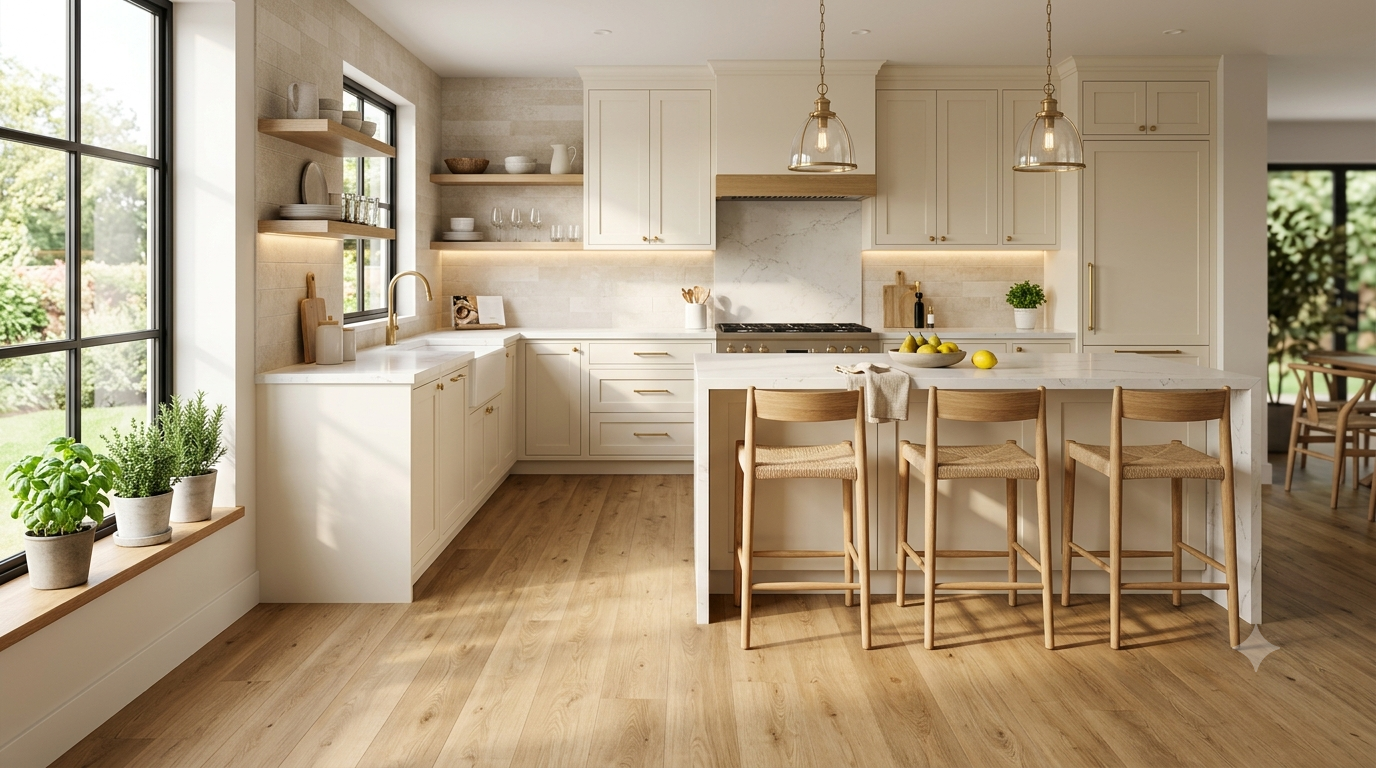
I Thought Choosing a Kitchen Floor Would Be Easy—Until I Started Looking
When we finally decided to renovate our kitchen, I assumed the flooring would be one of the quickest decisions.
How hard could it be?
Pick something that looked nice, matched the cabinets, and fit the budget.
Simple.
Then I walked into the flooring showroom.
Rows of porcelain tiles.
Luxury vinyl planks.
Engineered hardwood.
Natural stone.
Laminate.
Cork.
Concrete.
Every option looked beautiful under the showroom lights, and every salesperson confidently claimed their product was the best.
The more samples I carried home, the more confused I became.
Some floors looked stunning but felt cold underfoot.
Others promised durability but didn’t have the warmth I wanted.
A few were surprisingly affordable but made me question how they’d look five years later.
That’s when I stopped asking, “What’s the most popular flooring?”
Instead, I started asking a much better question:
“Which floor will still make me happy after thousands of meals, spills, family gatherings, and ordinary Tuesday mornings?”
That question completely changed the way I approached the renovation.
If you’re planning a kitchen update in 2026, here’s what I learned before making one of the biggest design decisions in the entire house.
Your Kitchen Floor Does More Work Than You Realize
Unlike almost any other room, the kitchen is constantly in use.
It’s where coffee gets spilled before work.
Where children drop cereal.
Where pets wait hopefully for something to fall.
Where heavy pots, chairs, and appliances move across the floor every single day.
The flooring doesn’t just have to look beautiful.
It has to survive real life.
That’s why choosing flooring based only on appearance often leads to disappointment.
The best kitchens balance beauty with practicality.
A floor that looks amazing on day one but scratches easily or becomes difficult to clean can quickly become a source of frustration.
The right flooring quietly makes everyday life easier without demanding constant attention.
Luxury Vinyl Plank (LVP) Continues to Surprise Me
I’ll admit it.
A few years ago, I dismissed luxury vinyl flooring.
I assumed it would look artificial and feel inexpensive.
I couldn’t have been more wrong.
Modern luxury vinyl plank has improved dramatically.
Many premium products now feature realistic wood textures, natural color variation, and embossed surfaces that are surprisingly difficult to distinguish from real hardwood at first glance.
But what impressed me most wasn’t the appearance.
It was the practicality.
Water doesn’t scare it.
Small spills wipe away effortlessly.
It’s softer underfoot than tile, making long cooking sessions noticeably more comfortable.
For busy households with children or pets, it’s easy to understand why LVP has become one of the most popular kitchen flooring choices in 2026.
It offers the warmth of wood without many of the maintenance concerns.
Porcelain Tile Is Still One of the Most Reliable Choices
If durability is your top priority, porcelain tile remains difficult to beat.
It’s resistant to moisture, scratches, stains, and heavy foot traffic.
That’s one reason professional designers continue recommending it for family kitchens.
What has changed is the style.
Instead of glossy tiles that dominated kitchens years ago, today’s designs lean toward matte finishes with subtle texture.
Large-format tiles are especially popular because they reduce grout lines, creating a cleaner, more seamless appearance.
Many homeowners are also choosing porcelain tiles that imitate natural limestone, concrete, or warm wood.
The technology has become remarkably convincing.
One thing to keep in mind, however, is comfort.
Tile is hard.
If you spend hours cooking, investing in a quality anti-fatigue kitchen mat can make a noticeable difference.
Engineered Hardwood Brings Warmth Without So Much Worry
I’ve always loved the character of real wood floors.
They instantly make a house feel welcoming.
The challenge has always been moisture.
Traditional solid hardwood doesn’t always respond well to frequent spills or changes in humidity.
Engineered hardwood solves many of those concerns.
Because it’s constructed with multiple layers, it offers greater stability while preserving the beauty of genuine wood on the surface.
It’s an excellent option for homeowners who want their kitchen to flow naturally into adjoining living spaces.
The continuous wood appearance creates visual openness, making smaller homes feel larger.
While engineered hardwood still requires care, it offers a practical balance between beauty and durability.
Natural Stone Creates Timeless Luxury
There’s something undeniably special about natural stone.
Every slab is unique.
No printed pattern can fully replicate its texture or character.
Materials like limestone, slate, and travertine continue to appeal to homeowners looking for timeless elegance rather than fast-moving trends.
Natural stone also ages beautifully.
Small imperfections often add to its charm rather than detract from it.
That said, stone usually requires more maintenance than porcelain or luxury vinyl.
Depending on the material, periodic sealing may be necessary to protect against stains and moisture.
If you’re willing to provide that extra care, natural stone rewards you with a floor that can remain beautiful for decades.
Cork Flooring Deserves More Attention
Before researching kitchen flooring, cork wasn’t even on my list.
Now I understand why it’s quietly gaining popularity.
Walking on cork feels noticeably softer than walking on tile or stone.
It naturally absorbs some sound, making busy kitchens feel calmer.
It’s also warmer underfoot during colder months, which is something I appreciated immediately after trying a sample in person.
Modern cork flooring has also become far more attractive than many people expect.
Today’s finishes include subtle wood tones and contemporary designs that fit beautifully into modern kitchens.
For homeowners who spend hours cooking every week, comfort alone makes cork worth considering.
Polished Concrete Is No Longer Just for Industrial Homes
A few years ago, polished concrete floors seemed reserved for modern lofts and ultra-minimalist homes.
Today, they’re appearing in a much wider range of kitchens.
I was surprised by how warm they can feel when paired with natural wood cabinets, soft lighting, and textured décor. Instead of looking cold or unfinished, polished concrete creates a clean backdrop that allows other design elements to stand out.
One of its biggest advantages is durability.
Concrete easily handles heavy appliances, dropped cookware, and years of daily foot traffic. It’s also incredibly easy to maintain when properly sealed.
The downside is comfort.
Standing on concrete for long periods can become tiring, and the surface naturally feels cooler during winter. Many homeowners solve this by adding washable runners or anti-fatigue mats in front of the sink and stove.
If you love modern interiors and don’t mind adding a little softness through rugs and accessories, polished concrete is a surprisingly practical option.
Flooring Trends That Are Fading in 2026
Every year brings new ideas, but not every trend has lasting appeal.
One style that’s slowly disappearing is highly glossy flooring.
While shiny surfaces may look impressive in a showroom, they tend to highlight every footprint, dust particle, and water splash in everyday life. Matte and low-sheen finishes have become much more popular because they hide imperfections while creating a softer, more natural look.
Another trend losing momentum is overly distressed flooring with exaggerated textures and artificial aging. Homeowners are increasingly choosing authentic materials and subtle finishes that feel timeless instead of heavily stylized.
Gray flooring is also evolving.
Cool, blue-toned grays that dominated kitchens a decade ago are being replaced by warmer neutrals such as greige, soft taupe, sandy oak, and honey-toned wood. These colors create a more welcoming atmosphere and pair beautifully with the earthy cabinet colors that are trending in 2026.
The shift isn’t about chasing fashion.
It’s about creating homes that feel comfortable to live in for years to come.
Choose Flooring Based on How You Actually Live
One lesson I wish someone had shared with me earlier is this:
Don’t choose flooring for the life you imagine.
Choose it for the life you already have.
If you cook several meals every day, comfort underfoot matters.
If you have young children, you’ll appreciate a floor that handles spills without stress.
If you have energetic pets, scratch resistance quickly becomes more important than appearance alone.
If you love entertaining, you’ll probably want a floor that’s easy to clean after gatherings.
It’s easy to become distracted by beautiful showroom displays, but the best flooring is the one that quietly supports your daily routine without demanding constant maintenance.
Don’t Forget to Think About the Entire Home
The kitchen doesn’t exist in isolation.
One of the smartest pieces of advice I received was to consider how the flooring connects with the rest of the house.
If your kitchen opens directly into the dining room or living area, using complementary flooring can make the entire space feel larger and more cohesive.
Many homeowners now continue the same luxury vinyl plank or engineered hardwood throughout open-plan homes, creating a seamless flow between rooms.
Even if you prefer a different material in the kitchen, choosing similar tones helps maintain visual harmony.
Transitions should feel intentional rather than abrupt.
Budget Doesn’t Always Determine the Best Choice
Before starting our renovation, I assumed spending more automatically meant getting a better floor.
Experience taught me otherwise.
Some of the most expensive materials required the most maintenance.
Meanwhile, several mid-range flooring options delivered excellent durability, attractive finishes, and easier upkeep.
Instead of asking which material is the most luxurious, ask which one provides the greatest value for your lifestyle.
For many families, that answer is luxury vinyl plank.
For others, it’s porcelain tile.
The “best” flooring isn’t universal.
It’s the one that matches your priorities.
Common Mistakes Homeowners Regret
Looking back, I noticed several mistakes that people often make during kitchen renovations.
The first is choosing flooring based solely on color.
A beautiful shade means very little if the material doesn’t suit your household.
Another mistake is ignoring samples.
Lighting dramatically changes how flooring looks throughout the day. Always bring samples home and view them in both natural daylight and evening lighting.
Some homeowners also underestimate maintenance requirements.
Natural stone, for example, offers incredible beauty but may require periodic sealing.
Finally, don’t rush the decision.
Kitchen flooring is one of the few surfaces you’ll interact with every single day.
It’s worth taking an extra week to compare options before making a long-term investment.
My Final Recommendation
After comparing materials, visiting showrooms, and living with different flooring options over the years, I’ve realized there’s no single winner.
Instead, there are several excellent choices depending on what matters most to you.
If I wanted the best balance of affordability, comfort, durability, and appearance, I’d confidently choose luxury vinyl plank.
If maximum durability came first, I’d lean toward large-format porcelain tile.
If warmth and natural character were my priorities, engineered hardwood would still be difficult to beat.
The important thing isn’t following trends.
It’s creating a kitchen you’ll genuinely enjoy using every day.
Because long after paint colors and décor change, the floor remains one of the hardest-working parts of your home.
Choose wisely, and you’ll appreciate that decision every single morning.
Key Takeaways
- Luxury vinyl plank remains one of the best all-around flooring options for busy kitchens in 2026.
- Porcelain tile offers outstanding durability and moisture resistance.
- Engineered hardwood provides natural warmth with better stability than solid hardwood.
- Natural stone delivers timeless beauty but requires additional maintenance.
- Cork flooring is an excellent choice for comfort during long cooking sessions.
- Matte finishes and warm neutral tones are replacing glossy, cool-gray flooring.
- Always choose flooring based on your lifestyle rather than trends alone.
Frequently Asked Questions
What is the best kitchen flooring in 2026?
Luxury vinyl plank (LVP) is one of the most popular choices because it combines durability, water resistance, comfort, and realistic wood-like designs.
Is hardwood still suitable for kitchens?
Engineered hardwood can work well in kitchens when properly maintained, offering the beauty of real wood with improved moisture stability.
Are porcelain tiles better than vinyl flooring?
Porcelain tiles are generally more durable and heat resistant, while luxury vinyl plank offers greater comfort underfoot and simpler installation.
What flooring color is trending in 2026?
Warm natural tones such as light oak, honey wood, greige, soft beige, and earthy neutrals are replacing cooler gray flooring.
Which kitchen flooring should I avoid?
Avoid choosing flooring based only on appearance. Highly glossy finishes, materials with poor water resistance, or options that don’t suit your household’s lifestyle often lead to regret.
Editorial Disclaimer
This article is intended for informational and inspirational purposes only. Flooring performance varies depending on installation quality, product specifications, maintenance, and household conditions. Always consult the manufacturer’s recommendations and, when necessary, seek advice from a qualified flooring professional before making renovation decisions. PrimeBuzzHub may display advertisements from Google AdSense and other trusted advertising partners. Advertising does not influence our editorial content or product recommendations.