
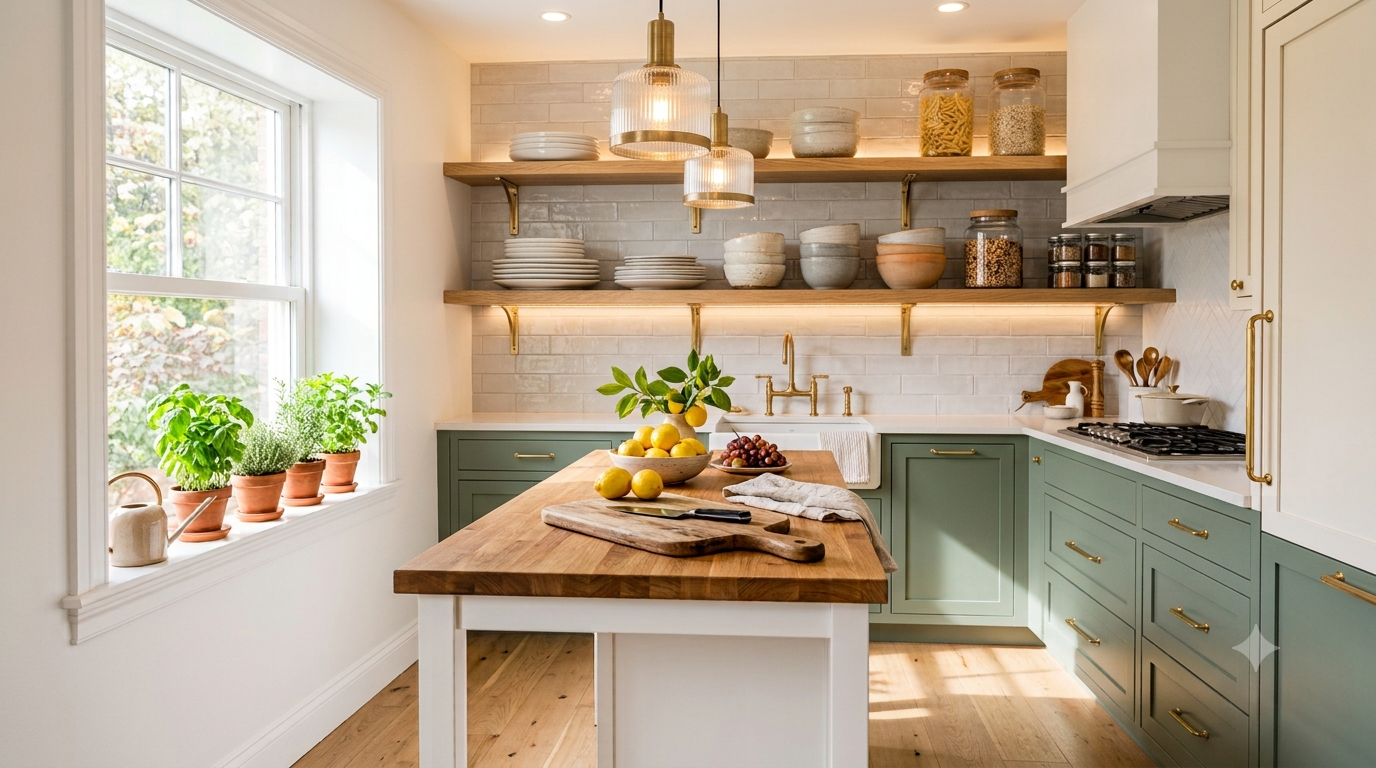
I Didn’t Realize My Kitchen Wasn’t Small—It Was Just Poorly Lit
For years, I blamed my kitchen’s size for everything.
It felt cramped while cooking, dark during the evenings, and somehow cluttered no matter how carefully I organized the countertops. I kept looking for bigger solutions—a new layout, extra storage, maybe even knocking down a wall one day.
Then something unexpected happened.
One weekend, while replacing an old ceiling fixture that had finally stopped working, I temporarily installed a brighter LED light. It wasn’t expensive. It wasn’t even the style I planned to keep.
But the moment I switched it on, the room felt completely different.
Corners that had always seemed gloomy suddenly looked open. The countertop appeared wider. Even the cabinets looked fresher.
That’s when I realized something surprising.
The kitchen hadn’t changed.
The lighting had.
Over the following months, I became almost obsessed with understanding how professional designers use light to transform ordinary kitchens. I experimented with warm LED strips beneath cabinets, replaced outdated bulbs, added a simple pendant over the sink, and even changed the color temperature of my ceiling lights.
None of these upgrades required a major renovation.
Yet together, they made the kitchen feel brighter, calmer, and noticeably larger.
If you’ve been thinking your kitchen simply isn’t big enough, don’t be too quick to blame the floor plan.
Sometimes the biggest transformation begins with better lighting.
Why Lighting Changes the Way We See Space
When we walk into a room, our eyes naturally follow light.
Bright, evenly lit spaces feel open and inviting, while dark corners create the impression that a room is smaller than it really is.
That’s why lighting has become one of the most important elements of kitchen design in 2026.
Instead of relying on a single ceiling fixture, designers now think in layers.
Each layer has a purpose.
Some lights illuminate work surfaces.
Others create warmth.
Some simply highlight beautiful textures like wood cabinetry or stone backsplashes.
When these layers work together, the kitchen feels balanced rather than overly bright.
And surprisingly, even a compact apartment kitchen can begin to feel much more spacious.
The Biggest Mistake Most Small Kitchens Make
If I could point to one issue I see again and again, it’s relying on a single ceiling light.
That one fixture is expected to light the entire room.
Unfortunately, it can’t.
While the center of the kitchen may be reasonably bright, shadows form beneath upper cabinets, around countertops, and inside corners where most of the cooking actually happens.
Those shadows make the room feel enclosed.
The solution isn’t necessarily adding more powerful lighting.
It’s placing light where it’s actually needed.
This simple shift completely changes how the kitchen feels to use every day.
Under-Cabinet Lighting Was the Upgrade I Wish I’d Made Years Earlier
I honestly didn’t expect such a dramatic difference.
Installing warm LED strips beneath my upper cabinets took less than an afternoon, yet it transformed the kitchen more than any decorative accessory ever had.
Instead of chopping vegetables in my own shadow, the countertops were evenly illuminated.
The backsplash suddenly became a design feature rather than a dark background.
Even during the evening, the kitchen felt cozy instead of harshly lit.
In 2026, under-cabinet lighting has become one of the most recommended upgrades because it’s affordable, energy-efficient, and surprisingly easy to install.
Many systems now include dimmable settings, motion sensors, and smart home compatibility, allowing you to adjust brightness depending on the time of day.
It’s one of those improvements you notice every single day.
Warm Light Almost Always Feels More Inviting
When I first replaced my bulbs, I made a common mistake.
I chose the brightest bulbs I could find.
The kitchen certainly became brighter.
It also felt like a hospital.
The cool blue-white light reflected off every surface and removed the warmth that made the room feel welcoming.
Eventually I switched to warm white LED lighting.
The difference was immediate.
Wood looked richer.
Cream-colored cabinets appeared softer.
Meals looked more appetizing.
The entire room felt comfortable rather than clinical.
Brightness matters.
But choosing the right color temperature matters just as much.
Pendant Lights Can Create a Beautiful Focal Point
One of my favorite additions was a single pendant light above the sink.
It wasn’t oversized or expensive.
It simply introduced another layer of light exactly where I spent the most time.
Pendant lighting also adds personality.
Glass pendants create an airy feel.
Natural woven shades introduce texture.
Brushed brass fixtures add warmth.
Matte black designs complement contemporary kitchens beautifully.
For small kitchens, simplicity is often the best approach.
One carefully chosen pendant usually has a bigger impact than several competing fixtures.
Don’t Ignore Natural Light
This lesson cost me nothing.
For years, I kept decorative items on the windowsill because they looked nice.
Large plants.
Tall jars.
Seasonal decorations.
Without realizing it, I was blocking a significant amount of daylight.
Once I cleared the window and switched to a lighter window treatment, sunlight spread much further across the room.
Natural light is impossible to replicate perfectly with artificial lighting.
Before investing in new fixtures, make sure you’re making the most of the daylight your kitchen already receives.
Layering Light Is the Secret Designers Rarely Skip
As I started paying more attention to professionally designed kitchens, I noticed they all had one thing in common.
They never relied on a single source of light.
Instead, they layered different types of lighting so the room felt balanced throughout the day.
The first layer is ambient lighting, which provides overall illumination. This usually comes from ceiling fixtures or recessed lights and ensures the entire room is comfortably lit.
The second layer is task lighting, which focuses on work areas like countertops, the sink, and the stove. Under-cabinet LED strips are one of the best examples because they eliminate shadows exactly where you prepare food.
The final layer is accent lighting. This is where personality comes in. Pendant lights above an island, soft lighting inside glass cabinets, or subtle toe-kick lighting beneath lower cabinets create warmth and depth.
Once I added these layers to my own kitchen, the room no longer felt flat. It felt intentional.
Smart Lighting Is Becoming the New Standard in 2026
One feature I never thought I’d appreciate was smart lighting.
At first, it seemed like a luxury.
Now, I use it every day.
In the morning, the lights gradually brighten with a warm glow while I make coffee.
During the afternoon, they stay bright for cooking and meal prep.
In the evening, I dim them to create a softer atmosphere while the family gathers around the kitchen.
Many smart lighting systems also allow you to control brightness, schedules, and even color temperature from your phone or through voice assistants.
The technology has become more affordable than ever, making it one of the easiest ways to modernize an existing kitchen without a major renovation.
Lighting Can Highlight the Features You Love Most
One unexpected benefit of better lighting is that it draws attention to the right details.
A beautiful tile backsplash suddenly becomes a design feature instead of disappearing into the background.
The grain of natural oak cabinets appears richer.
Quartz countertops reflect subtle patterns that weren’t noticeable before.
Even simple decorative items like a ceramic fruit bowl or a vase of fresh herbs look more inviting when they’re softly illuminated.
Good lighting doesn’t just help you see your kitchen.
It helps you appreciate it.
The Best Lighting Choices for Low Ceilings
Many small kitchens also have relatively low ceilings, which can make oversized fixtures feel overwhelming.
I learned that keeping lighting visually light is just as important as making the room bright.
Flush-mount ceiling fixtures work well because they provide even illumination without hanging too low.
Slim recessed lights create a clean, modern look while preserving headroom.
If you love pendant lighting, choose smaller fixtures with simple shapes instead of oversized statement pieces.
The goal is to keep the room feeling open rather than crowded.
Common Kitchen Lighting Mistakes
The first mistake is choosing brightness without considering comfort.
An overly bright kitchen can feel cold and exhausting, especially during the evening.
Another common issue is mixing different bulb colors.
Warm under-cabinet lighting paired with cool white ceiling lights often creates an inconsistent look that feels unintentionally mismatched.
Ignoring dimmers is another missed opportunity.
Being able to adjust brightness throughout the day dramatically changes how the kitchen feels.
Finally, don’t overlook maintenance.
Dusty light fixtures and aging bulbs gradually reduce brightness without you even noticing.
A quick clean every few months helps your lighting perform at its best.
Budget-Friendly Upgrades That Make a Big Difference
You don’t need a complete electrical renovation to improve your kitchen.
Some of the most effective upgrades are surprisingly affordable.
Rechargeable under-cabinet LED lights are perfect for renters.
Replacing outdated bulbs with high-quality warm LEDs instantly improves the atmosphere.
A stylish pendant light above the sink or dining table can become a beautiful focal point without stretching your budget.
Even replacing old switch plates, updating fixture finishes, or installing dimmer switches can make the room feel more refined.
Small changes often create the biggest visual impact.
My Favorite Lighting Combination
After months of experimenting, I finally settled on a setup that works beautifully for everyday life.
Soft recessed ceiling lights provide general brightness.
Warm LED strips beneath the upper cabinets illuminate the work surfaces.
A single brass pendant light hangs above the sink.
Natural daylight fills the room during the morning.
At night, I dim everything slightly.
The kitchen feels calm, welcoming, and surprisingly spacious.
It’s not the most expensive lighting plan.
But it’s the one that makes me enjoy spending time there every single day.
Final Thoughts
Before changing the lighting, I believed my kitchen needed more space.
Now I realize it simply needed more thoughtful illumination.
The room hasn’t grown.
The walls haven’t moved.
Yet every time I walk in, it feels brighter, more open, and far more enjoyable to use.
That’s the power of good lighting.
It’s one of the few design upgrades that improves both how a kitchen looks and how it functions.
Whether you’re planning a complete renovation or simply replacing a few fixtures, investing in better lighting is one decision you’ll appreciate every single day.
Sometimes the difference between an ordinary kitchen and one you genuinely love isn’t new cabinets or expensive countertops.
It’s simply seeing the room in a better light.
Key Takeaways
- Layered lighting makes even small kitchens feel larger and more functional.
- Combine ambient, task, and accent lighting for the best results.
- Under-cabinet LED lighting is one of the most effective upgrades for small kitchens.
- Warm white lighting creates a welcoming atmosphere and complements natural materials.
- Smart lighting systems offer convenience, energy savings, and customizable brightness.
- Maximize natural daylight before investing in additional fixtures.
- Dimmers provide flexibility and improve the mood of the space throughout the day.
Frequently Asked Questions
What is the best lighting for a small kitchen?
A combination of ambient ceiling lighting, under-cabinet task lighting, and one or two accent fixtures provides the best balance of functionality and atmosphere.
Should kitchen lights be warm or cool white?
Warm white LEDs are generally preferred because they create a cozy environment and make natural materials, food, and cabinetry appear more inviting.
Are under-cabinet lights worth installing?
Yes. They improve visibility while cooking, reduce shadows, and make the kitchen feel brighter without increasing glare.
Can smart lighting really make a difference?
Absolutely. Smart lighting allows you to adjust brightness and schedules, helping the kitchen adapt to different activities throughout the day.
How can I brighten a kitchen without major renovations?
Replace outdated bulbs, install under-cabinet lighting, add a pendant light, use lighter window treatments, and maximize natural daylight.
Editorial Disclaimer
This article is intended for informational and inspirational purposes only. Lighting requirements vary depending on your home’s layout, electrical system, and local building regulations. Consult a qualified electrician for permanent installations or wiring modifications. Product suggestions are based on current design trends and practical experience rather than paid endorsements. PrimeBuzzHub may display advertisements served by Google AdSense and other trusted advertising partners. Advertising does not influence our editorial recommendations.